I’m embarking on an experimental project. I plan to use only free virtual instruments and effects. The bulk of these will come from the Computer Music magazine giveaway. Next I need a Digital Audio Workstation (DAW) to host the virtual instruments and effects plugins. There are a number of free ones to choose from but I’ve decided to use Reaper. Reaper is not exactly free – it’s £45 but you can ignore the prompts to pay for as long as your conscience will allow. I’ve used Reaper before and as far as I recall it doesn’t come with any plugins making it a perfect tool to host free plugins for the experiment. Next what computer to use? I have a few choices but I want to use something not in action on any other project(s). I have two obsolete Mac Book Pros. One is relatively recent and the other is very old (2013). The older on is a big beast but it’s the one I’ll use because it’s rock solid before they started to make them sleek with fewer USB ports etc. This is why I’m calling the project “Obsolescence”. I’ll not be rigid though – I may occasionally use newer more sophisticated stuff. But the use will be sparing. I’ll keep field notes here of my progress.
In 1990, I got wind that Elkie Brooks, the highly regarded British singer, was about to record a new album. I selected 3 song demos that I thought might suit her. I popped the envelope containing the audio cassette into the post box with a mixture of hope and pragmatic acceptance. These things nearly always come to nothing. How could I know at that point that a musical roller coaster ride was about to begin?
To my surprise, a couple of weeks after posting those demos, I got a phone call out of the blue from Elkie Brooks herself. She thanked me for sending the songs and declared she loved “One Of A Kind”, a song I’d co-written with Tommy Morrison. Elkie then explained that she was recording a new album and she’d like to include One Of A Kind. Would that be OK? I thought to myself, darned tootin’ that would be OK, but then she had more to say: Elkie said she was looking for a very strong single to release off the album. Could I come up with something? I said that I would certainly have a go. I promised to send the lyrics and chord chart for One Of A Kind and after she hung up, I called Tommy Morrison and told him the good news. Of course, he was delighted.
I needed to come up with a song strong enough to be the lead single off Elkie’s forthcoming album. This was an opportunity too good to pass up. But it wasn’t going to be easy. It had to be better than Elkie might write herself, and obviously other top-class writers would be pitching songs into that album project.
And so, before I began writing, I pondered the situation quite a bit, and I listened to a number of Elkie’s recordings. I was going to craft something around her vocal style and work on a melody that would give her a chance to shine as a vocalist. She was (and still is) a highly respected singer. I also needed a lyric that would match her singing style and exude a “strong woman” vibe. I locked myself away in my studio for several days and after countless hours of writing, editing, and rewriting, I emerged with “The Last Teardrop”.
With the usual “here goes nothing”, I posted the demo off to Elkie and waited for a response. A few days later, the response came: “You cracked it, everyone agrees – The Last Teardrop will be the lead single off the album, and we will feature both Teardrop and One Of A Kind on the album”, Marvellous! (I thought) When I got off the phone I called my friend Gus Dudgeon, I knew he’d be interested as he had produced Elkie’s previous two albums, “Pearls” and “Pearls Two”. He was pleased for me and asked me to send both song demos so he could have a listen.
A few days later, Gus called back and told me he liked the songs. He added, “and Elkie’s right, The Last Teardrop is a strong single”. I sensed a “but” and, sure enough, one arrived. Gus said that it needed several rewrites to make the song even better. He suggested extending the first verse a little and adding more lift to the choruses. And then he said, “and the first line of the chorus has to go -’baby oh baby’, you really should know better than that old bean”. Then I said, “but why would I do this? She’s already accepted the song and is about to record it”. And Gus replied, “because you owe it to yourself to make it the very best it can be”. It was typical of Gus to push me on to do better. He had been the record producer of several of my songs and always did that. And for a while, he was my publisher, and he pushed me even harder. But at this time, he was neither my producer nor my publisher. I assumed he was only doing it to assist as a friend. Anyway, I accepted the challenge and went to work on a rewrite. And you know what? – he was right, the song became much better. I sent the new version off to Gus. He called me up, really excited about the new version. He put the track on and played it down the phone to me as if I’d never heard this new song that he had discovered. Gus narrated the entire song: “listen to this bit, terrific”. He pointed out all the subtle little bits he’d noticed. And one particular section I remember to this day “wait for this guitar bit ……. It’s building ….. Here it comes ….. Whoaaaahhh”. His enthusiasm was infectious.
So, then I had to call Elkie Brooks and tell her the song she loved so much had changed. With some trepidation, I called and explained Gus’s suggestions and how I now had a new demo of an improved song. She was a bit freaked out about it and said, “Gus isn’t my producer anymore”. I said that I knew this and explained that Gus was only being helpful. I sent the new version, and everyone agreed the song was even better. And that’s the version Elkie recorded put out as the lead single off the Pearls Three Album.
Now, fast forward to today, and why has this story come to mind now? Well, I’m preparing to do an acoustic gig in Jesmond on August 5th. A first for me as I’ve never performed my songs solo before. But I really must include The Last Teardrop in the set. However, as I’ve stated, I wrote it for a singer with a powerful vocal range (which, sadly; I do not possess). Plus, there are a bunch of tricky chords in it. But I’ll give it a go. More about the Jesmond show nearer the time, and perhaps you’d like to come along and see if I can pull it off. I’m no Elkie Brooks but you’ll hear the song just as it came from the writer’s pen.
My first stop is my lockup on Portrack Lane where I’ll pick up the small PA, projector and screen, pedal board and other gubbins. Then northwards. I plan to cross the Tyne a little further West than the Sat Nav suggested because I spotted a rather nice-looking pub “The Boathouse. So it’ll be lunch there. Then I’ll cross the river to give my talk “A Songwriter’s Life” at the Women’s Institute. Of all my talks this is the one I’ve delivered most time and it always goes down a storm. After that, I’m heading over to Harbourmaster Productions to lay down some rock and roll. No doubt by day’s end I’ll be a tired teddy bear and I’ll take me home to bed.
In the late 70’s I was house producer at Neat Records in Wallsend. In 1981 I took a brief sabbatical and went to London to cut a recording of one of my songs for State Records with Wayne Bickerton producing. The recording is attached to this post, I am playing guitar on the track, but the rest of the guys on the song were session musicians.
These guys were top-notch players and I felt a bit out of place in their company. As the session got underway, Wayne was setting up the drum sounds. The young whippersnapper on the kit said to Wayne, fuck off to the pub and I’ll set up the sounds myself.
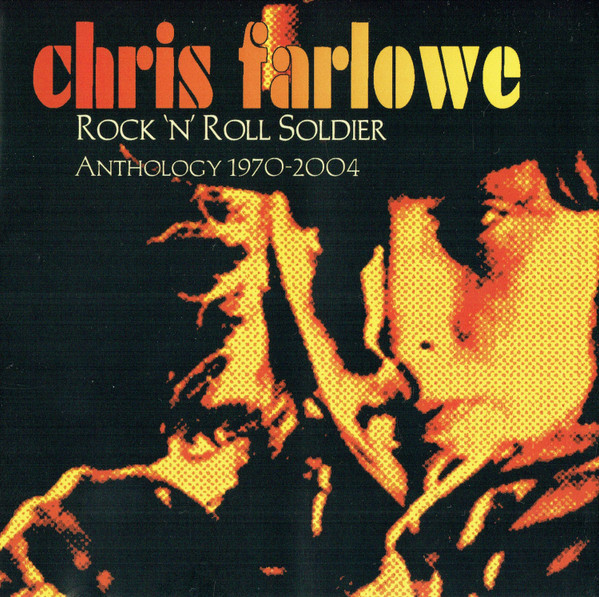
So we all fucked off to the pub. When we returned, we cut the recording you can hear Chris Farlowe singing below
When I returned to Neat Records I bumped into Keith Satchfield of the band Fist and he asked me how the session in London had gone. I explained about the rather stiff atmosphere in the studio. how good the musicians were et cetera. Keith then asked me who the season musicians were and I said I’m sorry I can’t remember any of their names but the drummer was a right cocky bugger. Then I said, oh hang on, the bass player had an unusual name. I delved into my memory banks and hit upon the name, Mo. He said, was it Mo Foster? I said yes, that’s the guy. So then Kieth said well, the drummer was most probably. Simon Phillips, I said yes, that was the guy, cocky bugger he was.
Kieth says to me: fuck me, I’ve only been playing guitar with a Jeff Beck band.
I posted preview clips for my upcoming album at the weekend. There’s still a fair bit of work to do on the album but I think we’re on the final or penultimate lap. The album started just before the lockdown and as a result, went through various stop-and-start stages. Some tracks got shelved and new ideas emerged. My main concern was how to follow “The Long Fade” which effectively had a gestation period of 50 years given that it was the first album I put out under my own name.
The “Distant Destination” album is neither superior nor inferior to “The Long Fade”. It’s different. If anything, it majors on the lyrics. It’s a lockdown album for sure in more ways than one. Many of the lyrics and storylines of the album are autobiographical. Yep, it’s all about me, me, me! But in a songwriterly way. A good singer can tell the story emerging from the words and a listener can live the story through their own emotional radar. The title song “Distant Destination tells the story of a chance meeting of two old friends. Or does it? Are there two people present at that meeting? Written during the lockdown and recorded remotely with superb vocals from Jen NormandaleNormandale and excellent Keyboards from Richard Naisbett.
I’ve been working on another set of chapters from my book which I will release soon. Here’s a little story from one of the chapters:
One of my favourite gigs was at Bellingham Town Hall. It seemed such an adventure to go so far and as a non-driver, it was always something of a mystery, out in the wilds of Northumberland. Ivan Birchall’s contracts stated the fee, arrival time, playing time and any other relevant stuff. The Bellingham contract had a special clause. They must have been stung by a non-arrival in the past, so it read – “Groups must telephone at 6 pm to confirm that they are on their way”. By 6 pm we were indeed on our way and coincidentally would be passing Hexham railway station at the time where, conveniently, on one side of the road there was a public phone booth and on the other side, even more conveniently, there was a public house. We made hasty use of the first convenience and somewhat more leisurely and liquid use of the latter. This ensured that we always arrived in Bellingham “ready to rock!” – and believe you me: we did! (Rock, that is.) The phone box is long gone but the pub is still there.



 In 1990, I got wind that Elkie Brooks, the highly regarded British singer, was about to record a new album. I selected 3 song demos that I thought might suit her. I popped the envelope containing the audio cassette into the post box with a mixture of hope and pragmatic acceptance. These things nearly always come to nothing. How could I know at that point that a musical roller coaster ride was about to begin?